
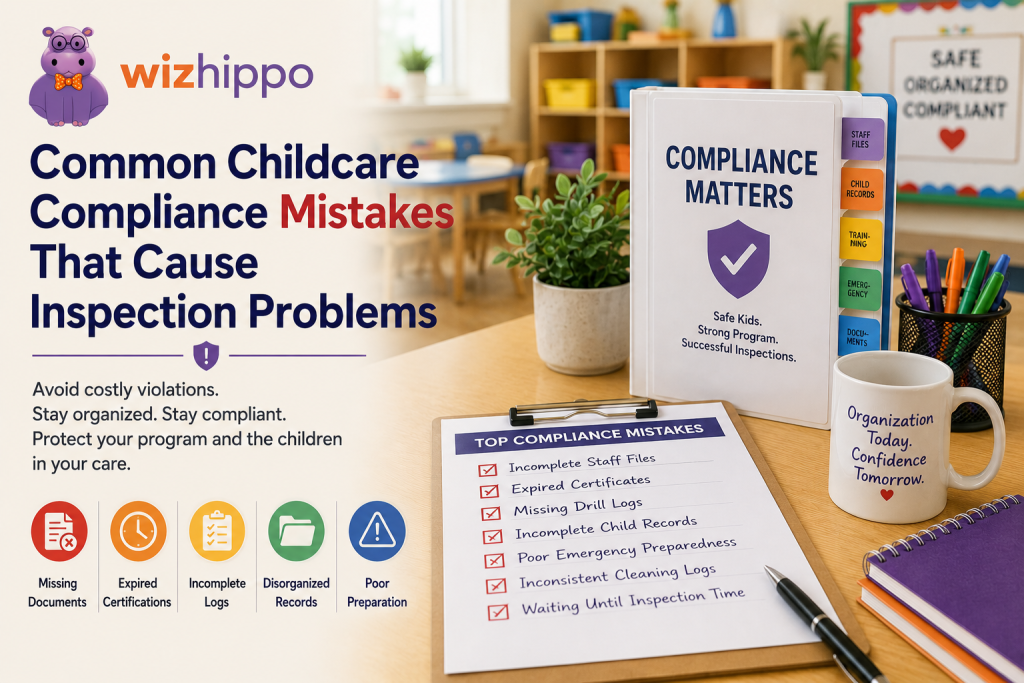
Childcare inspections can feel stressful — especially when providers discover missing documents, expired certifications, incomplete logs, or organizational issues at the last minute.
In many cases, inspection problems are not caused by major safety violations, but by small compliance mistakes that build up over time.
The good news is that most of these issues are preventable with better organization, documentation systems, and operational routines.
In this guide, we’ll review some of the most common childcare compliance mistakes that cause inspection problems and how childcare providers can avoid them.
Why Compliance Organization Matters
Licensing inspections are designed to verify that childcare centers maintain safe, organized, and compliant operations for children and staff.
Inspectors often review:
- Staff files
- Child records
- Emergency preparedness documentation
- Training records
- Drill logs
- Health and sanitation procedures
- Attendance records
- Medication documentation
- Operational policies
When records are incomplete or difficult to locate, inspections become more stressful and can create unnecessary findings.
1. Incomplete Employee Files
One of the most common inspection issues involves missing staff documentation.
Centers often discover during inspections that files are missing:
- CPR certifications
- Background checks
- Training certificates
- Medical forms
- Orientation documentation
- Emergency contacts
Many providers store records in multiple locations, which makes inspections more difficult.
How to Avoid It
Use a standardized employee file checklist and review staff records monthly to track missing or expiring documentation.
2. Expired CPR or Training Certifications
Expired certifications are one of the most preventable compliance issues.
Providers often forget to monitor expiration dates for:
- CPR certifications
- Pediatric First Aid
- Mandated reporter training
- Health and safety training
- Continuing education requirements
During inspections, expired certifications can quickly become operational concerns.
How to Avoid It
Use a certification expiration tracker and schedule renewal reminders before expiration dates approach.
3. Missing Drill Logs
Fire drills, tornado drills, and emergency preparedness documentation are frequently reviewed during inspections.
Common mistakes include:
- Missing drill dates
- Incomplete attendance documentation
- Missing staff signatures
- No corrective action notes
- Inconsistent drill schedules
How to Avoid It
Maintain organized emergency drill logs in one centralized location and review them regularly.
4. Disorganized Child Files
Child records often become incomplete as families update forms throughout the year.
Missing items may include:
- Emergency contacts
- Immunization records
- Enrollment forms
- Pickup authorizations
- Medical action plans
- Consent forms
Incomplete child files can create both compliance and safety concerns.
How to Avoid It
Review child records periodically and create renewal procedures for outdated forms.
5. Poor Emergency Preparedness Organization
Many childcare providers maintain emergency procedures, but documentation is scattered across binders, classrooms, or filing cabinets.
This creates confusion during emergencies and inspections.
Common Problems
- Missing evacuation plans
- Outdated emergency contacts
- Incomplete emergency binders
- Unclear staff responsibilities
- Missing shelter-in-place procedures
How to Avoid It
Create a centralized emergency preparedness binder with clearly organized sections and updated procedures.
6. Inconsistent Cleaning and Sanitation Documentation
Inspection teams may review cleaning and sanitation procedures to ensure proper operational practices.
Centers sometimes struggle with:
- Missing cleaning schedules
- Inconsistent documentation
- Unclear procedures
- Lack of accountability tracking
How to Avoid It
Use classroom cleaning checklists and sanitation logs to create consistent operational routines.
7. Waiting Until Inspection Time to Organize
This is perhaps the biggest mistake of all.
Many childcare providers only begin organizing records after receiving inspection notices or licensing reminders.
This creates unnecessary stress and increases the likelihood of missing documentation.
How to Avoid It
Treat compliance organization as an ongoing operational process instead of a last-minute project.
Small weekly reviews prevent major inspection problems later.
Simple Systems Create Better Compliance
The most organized childcare centers are not necessarily the largest programs — they simply use consistent systems.
Simple tools such as:
- Checklists
- Training trackers
- Emergency binders
- Certification reminders
- Inspection readiness templates
can dramatically improve organization and reduce operational stress.
Download Free Childcare Compliance Resources
WizHippo offers free childcare compliance templates and operational resources designed to help childcare providers stay organized and inspection-ready.
Download:
- Employee file checklists
- Emergency preparedness templates
- Fire drill logs
- CPR expiration trackers
- Staff training trackers
- Inspection readiness checklists
👉 Explore Free Childcare Compliance Resources
Suggested Internal Links
Inside article: