
Running a childcare center is already a full-time job. Between managing staff, communicating with parents, handling paperwork, and supporting children, it’s easy for small details to slip through the cracks.
The challenge is that many providers don’t discover what’s missing until an inspection is approaching.
While licensing requirements vary by state, inspectors across the country often look for many of the same records and procedures.
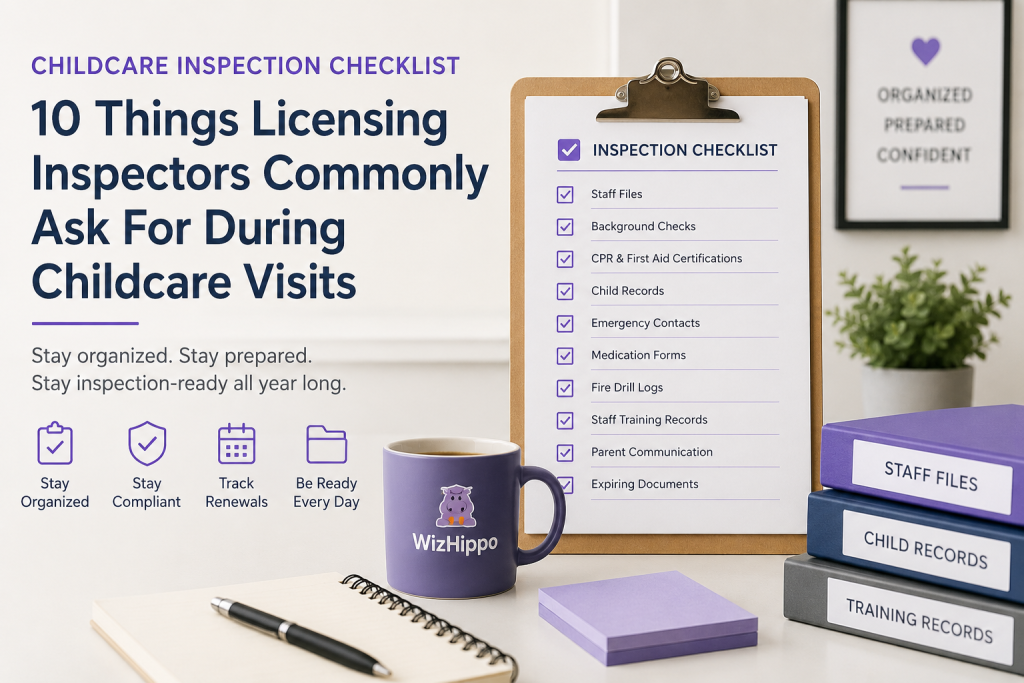
Here are 10 items every childcare provider should keep organized and easy to access.
1. Staff Files
Staff files are one of the first places inspectors may review.
Make sure each employee file contains:
- Employment application
- Emergency contact information
- Required signatures
- Training documentation
- Background check information
- CPR and First Aid certifications
- Any state-required forms
A good rule of thumb is this:
If someone asked for a staff file, could you locate it in under one minute?
2. Background Check Documentation
Background check requirements vary by state, but documentation should always be current and easy to locate.
Don’t assume a completed check is enough.
Keep copies of:
- Clearance documentation
- Fingerprint confirmations
- Renewal dates (if applicable)
3. CPR and First Aid Certifications
One of the most common issues providers encounter is expired certifications.
Create a simple tracking system for:
- CPR expiration dates
- First Aid expiration dates
- Upcoming renewals
Don’t wait until the month of expiration.
4. Child Records
Every child should have a complete file.
Review these items regularly:
- Enrollment forms
- Emergency contacts
- Medical information
- Authorized pickup lists
- Health forms
- Immunization records (if required)
Outdated information can quickly become a problem during inspections.
5. Medication Authorization Forms
If your center administers medication, verify that all forms are:
- Signed
- Current
- Complete
- Easy to locate
Double-check expiration dates and parent authorizations.
6. Emergency Plans
Inspectors may ask about emergency procedures.
Make sure staff know where to find:
- Evacuation plans
- Severe weather procedures
- Emergency phone numbers
- Emergency contact lists
Documentation should be accessible to everyone.
7. Fire Drill Logs
Many providers forget to update drill records consistently.
Maintain documentation for:
- Fire drills
- Tornado drills
- Lockdown drills
- Emergency practice exercises
Record dates and completion information.
8. Staff Training Records
Training requirements can quickly become overwhelming.
Track:
- Required annual hours
- Mandated trainings
- Orientation completion
- Specialized certifications
Avoid keeping this information scattered across multiple places.
9. Parent Communication Records
Keep important communication documented.
Examples include:
- Incident reports
- Behavioral discussions
- Policy acknowledgements
- Permission forms
Having a clear communication history can be extremely helpful.
10. Expiring Documents
Perhaps the biggest challenge isn’t missing paperwork.
It’s forgetting something that quietly expired months ago.
Create a monthly review process for:
- CPR certifications
- First Aid certifications
- Training renewals
- Background checks
- State-required documents
A small monthly habit can prevent major last-minute stress.
The Goal Isn’t To Pass An Inspection
Many providers focus on “passing an inspection.”
A better goal is to become inspection-ready every day.
When your records are organized and your team knows where everything is located, inspections become far less stressful.
You spend less time scrambling and more time focusing on what matters most: caring for children.
Want a quick way to see how prepared your center is?
Take our free 2-minute Inspection Readiness Check and receive an instant score along with practical action items to improve your readiness.