
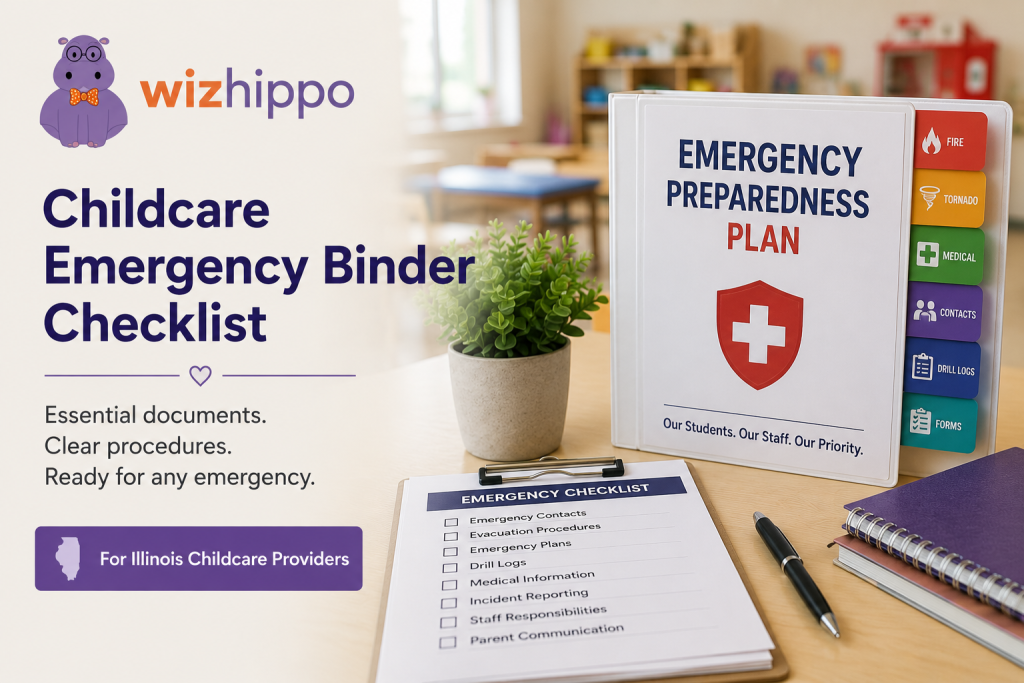
Emergencies can happen without warning, and childcare providers in Illinois are expected to maintain organized emergency preparedness documentation to protect children, staff, and visitors.
Whether you operate a daycare center, preschool, or home childcare program, having a properly organized emergency binder helps your staff respond quickly during critical situations and demonstrates operational readiness during inspections.
In this guide, we’ll explain what should be included in a childcare emergency binder and how Illinois childcare providers can stay prepared for emergencies and licensing reviews.
Why Every Childcare Center Needs an Emergency Binder
A childcare emergency binder serves as a centralized location for important emergency procedures, contact information, evacuation plans, and safety documentation.
An organized binder helps childcare programs:
- Respond faster during emergencies
- Keep emergency contacts accessible
- Document drills and incidents properly
- Prepare for DCFS inspections
- Improve staff preparedness
- Reduce operational confusion during stressful situations
Many providers only begin organizing emergency documents after an inspection notice or incident occurs. Creating a structured binder in advance helps avoid compliance issues and improves safety for everyone in the program.
What Should Be Included in a Childcare Emergency Binder?
Here are some of the most important sections childcare providers should organize inside an emergency preparedness binder.
Emergency Contact Information
Your binder should contain updated emergency contact information for:
- Parents and guardians
- Authorized pickup contacts
- Emergency services
- Local health department
- Poison control center
- Utility companies
- Building management
- Staff emergency contacts
Emergency phone lists should be reviewed and updated regularly.
Evacuation Procedures
Illinois childcare providers should maintain clear evacuation instructions for emergencies such as:
- Fire
- Tornadoes
- Severe weather
- Gas leaks
- Building damage
- Hazardous material exposure
Include:
- Exit routes
- Designated meeting locations
- Transportation plans
- Attendance accountability procedures
- Relocation sites
Fire Drill and Tornado Drill Logs
Inspection teams often review drill documentation during compliance visits.
Keep organized records for:
- Fire drills
- Tornado drills
- Lockdown drills
- Shelter-in-place exercises
- Emergency response training
Your logs should include:
- Date
- Time
- Staff involved
- Number of children present
- Notes or corrective actions
Medical and Health Information
Emergency binders should include access to important medical documentation such as:
- Allergy lists
- Medication authorization forms
- Emergency care plans
- Medical action plans
- Special accommodations
- Incident reporting procedures
Programs should ensure medical information remains accessible while also protecting confidentiality.
Staff Emergency Responsibilities
Clearly define staff responsibilities during emergencies.
Include:
- Classroom assignments
- Evacuation leaders
- Attendance responsibilities
- Communication procedures
- Transportation assignments
- Infant/toddler evacuation procedures
Staff should periodically review emergency procedures to ensure preparedness.
Incident and Accident Reporting Forms
Every childcare center should maintain organized documentation procedures for incidents and emergencies.
Keep printable forms available for:
- Injuries
- Illnesses
- Behavioral incidents
- Parent notifications
- Emergency responses
- Facility hazards
Consistent documentation helps protect both children and providers.
Common Emergency Binder Mistakes
Many childcare providers unknowingly create compliance risks by:
- Using outdated contact lists
- Missing drill documentation
- Storing forms in multiple locations
- Failing to review procedures regularly
- Keeping incomplete incident reports
- Not training staff on emergency procedures
A simple, organized system helps reduce these issues significantly.
Tips for Staying Inspection-Ready
To maintain an organized emergency preparedness system:
- Review your binder monthly
- Replace outdated forms immediately
- Store backup digital copies securely
- Train new staff on emergency procedures
- Conduct regular emergency drills
- Keep emergency contacts current
Preparedness is not only about compliance — it helps create a safer environment for children and staff.
Download Free Emergency Preparedness Resources
WizHippo offers free childcare compliance templates and operational resources designed for Illinois childcare providers.
Download:
- Emergency preparedness checklists
- Fire drill logs
- Staff training trackers
- Compliance templates
- Inspection readiness resources
👉 Explore Free Childcare Compliance Resources
Suggested Internal Links
Inside article:
- Illinois Inspection Readiness Checklist
- Fire Drill & Emergency Log Template
- Parent Emergency Contact Form
- Illinois Childcare Emergency Preparedness Binder (ebook)
- DCFS Compliance Resources page
Suggested Excerpt
Learn what documents should be included in a childcare emergency binder for Illinois daycare centers and preschools. Includes preparedness tips, drill logs, emergency contacts, and compliance resources.