
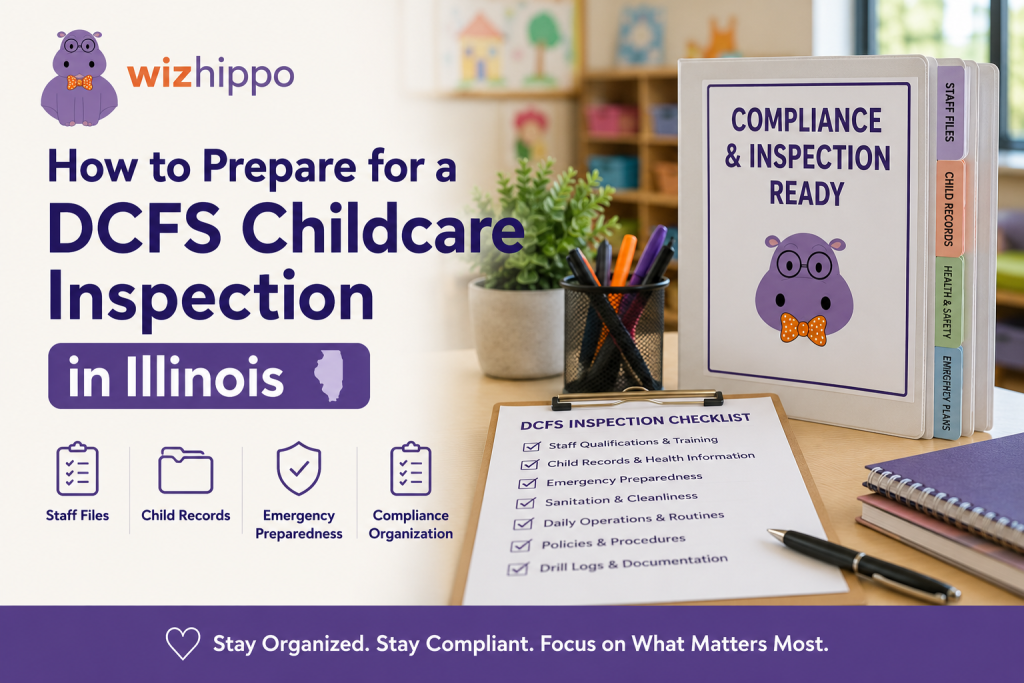
Preparing for a DCFS childcare inspection in Illinois can feel overwhelming, especially for childcare providers balancing enrollment, staffing, compliance documentation, emergency preparedness, and daily operations at the same time.
The reality is that most successful inspections are not about perfection — they are about organization, consistency, and documentation.
Providers who maintain organized records and operational systems year-round usually experience far less stress during inspections.
In this guide, we’ll review the most important areas Illinois childcare providers should prepare before a DCFS inspection.
1. Organize Employee Files and Staff Documentation
One of the first areas inspectors commonly review is employee documentation.
Disorganized or incomplete staff files are one of the most common causes of compliance problems during inspections.
Every employee file should be organized and easy to review.
Important documents often include:
- Background checks
- Fingerprinting documentation
- CPR certifications
- First Aid certifications
- Physical examinations
- TB testing documentation
- Mandated reporter training
- Orientation records
- Staff training hours
- Emergency contact forms
- Employment documentation
It is also important to monitor expiration dates regularly. Expired CPR certifications or outdated physicals are very common inspection findings.
Many providers now use tracking spreadsheets or compliance checklists to stay organized throughout the year.
2. Review Child Records Carefully
Child files are another major inspection area.
Inspectors often review multiple child files during visits to verify documentation is current and properly organized.
Important child records commonly include:
- Enrollment forms
- Emergency contacts
- Immunization records
- Health examinations
- Pickup authorizations
- Allergy information
- Medication authorizations
- Consent forms
- Discipline policy acknowledgements
Providers should regularly audit child files to identify missing or expired documentation before inspections occur.
Maintaining standardized child file folders or digital organization systems can significantly reduce stress during inspections.
3. Prepare Emergency Procedures and Drill Documentation
Emergency preparedness is an important operational and licensing responsibility for childcare centers.
Illinois providers should maintain organized emergency documentation that staff can access quickly during emergencies.
Important emergency documentation may include:
- Fire evacuation procedures
- Tornado procedures
- Shelter-in-place plans
- Lockdown procedures
- Emergency contact lists
- Parent notification procedures
- Relocation plans
- Emergency transportation plans
Inspectors may also review drill documentation, including:
- Fire drill logs
- Tornado drill records
- Emergency preparedness training documentation
Keeping emergency procedures organized in a centralized binder can help providers stay inspection-ready year-round.
4. Maintain Sanitation and Operational Documentation
Health, sanitation, and operational organization are also important inspection areas.
Providers should maintain documentation related to:
- Cleaning schedules
- Sanitization procedures
- Handwashing procedures
- Playground inspections
- Medication administration logs
- Food preparation procedures
- Refrigerator temperature logs
- Daily classroom cleaning checklists
Consistent documentation helps demonstrate that procedures are being followed regularly rather than only before inspections.
5. Monitor Staff Training Requirements
Staff training documentation is another area that can quickly become difficult to manage as centers grow.
Providers should maintain organized systems for tracking:
- Annual training hours
- Professional development
- Health and safety training
- Orientation completion
- CPR renewals
- Licensing-related training requirements
Many childcare providers now use training trackers or compliance spreadsheets to monitor deadlines and avoid missing required renewals.
6. Create an Inspection-Ready Compliance Binder
One of the best ways to reduce inspection stress is maintaining a centralized compliance binder or operational organization system.
This may include sections for:
- Staff files
- Child records
- Emergency procedures
- Drill documentation
- Licensing documentation
- Training records
- Operational policies
- Compliance checklists
When documents are organized and easy to locate, inspections tend to run much more smoothly.
7. Stay Inspection-Ready Year Round
One of the biggest mistakes providers make is waiting until inspections are approaching before organizing documentation.
The most successful childcare providers create systems that support ongoing operational organization and compliance readiness throughout the year.
Small organizational habits can prevent major compliance problems later.
Inspection readiness is ultimately about consistency, preparation, and maintaining organized records.
Free Illinois Inspection Readiness Checklist
To help childcare providers stay organized, we created a free Illinois Inspection Readiness Checklist that includes:
✔ Staff file organization
✔ Child record tracking
✔ Emergency preparedness items
✔ Drill documentation
✔ Compliance organization sections
✔ Operational readiness reminders
Download the free checklist here:
👉 https://wizhippo.com/downloads/illinois-inspection-readiness-checklist/
Stay Organized & Inspection-Ready
Browse free childcare compliance templates, operational checklists, emergency preparedness resources, and staff tracking tools designed for childcare providers.